Software Architecture
Choosing a Software Framework: Why Security Matters More Than Initial Cost
A framework is not secure because it is fashionable, commercial or open source. Choose an ecosystem whose support lifecycle, update path and operating model fit the organisation that must maintain it for years.
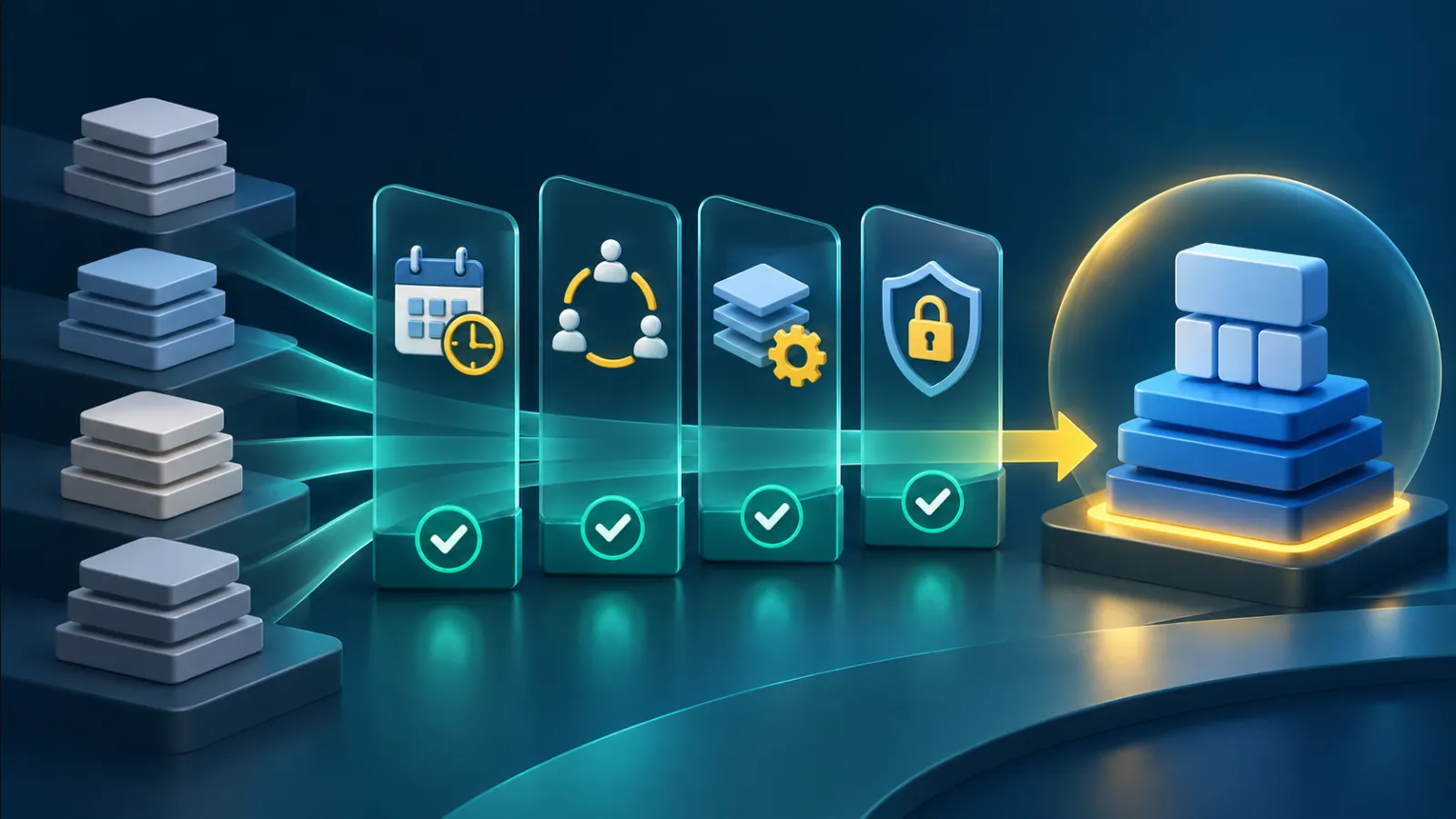
The cheapest build can create the most expensive ownership model
Framework selection affects far more than developer productivity. It determines release cadence, dependency conventions, hosting choices, observability, identity integration and the shape of future upgrades. A low initial quote can hide years of fragile patching or scarce skills.
That does not mean buying the most expensive stack. Mature .NET, PHP, Node.js, Java and other ecosystems all support serious software. Each can also be deployed badly. The useful question is whether the proposed versions, libraries and team practices create a supportable system for this business.
Compare total responsibility: who watches advisories, how quickly servicing updates reach production, what breaks on major upgrades and whether another competent team could take over. Security cost appears throughout the lifecycle, not as a separate product feature.
Support labels describe time, not automatic safety
Long-term support means maintainers commit to a defined support window. It does not mean an application can remain on its original patch release. Microsoft's .NET release and support policy describes monthly servicing and expects a supported application to use the current servicing level. PHP branches move from active support to security-only support and then end of life. Node.js uses its own release schedule.
An LTS release can reduce major-upgrade frequency, which suits stable business systems. A shorter-support release can be reasonable when a team updates continuously and needs newer capabilities. Choosing LTS because nobody intends to patch is the opposite of the model.
Record an intended upgrade date before selecting a version. Without a funded exit from the support window, “supported today” becomes tomorrow's emergency.
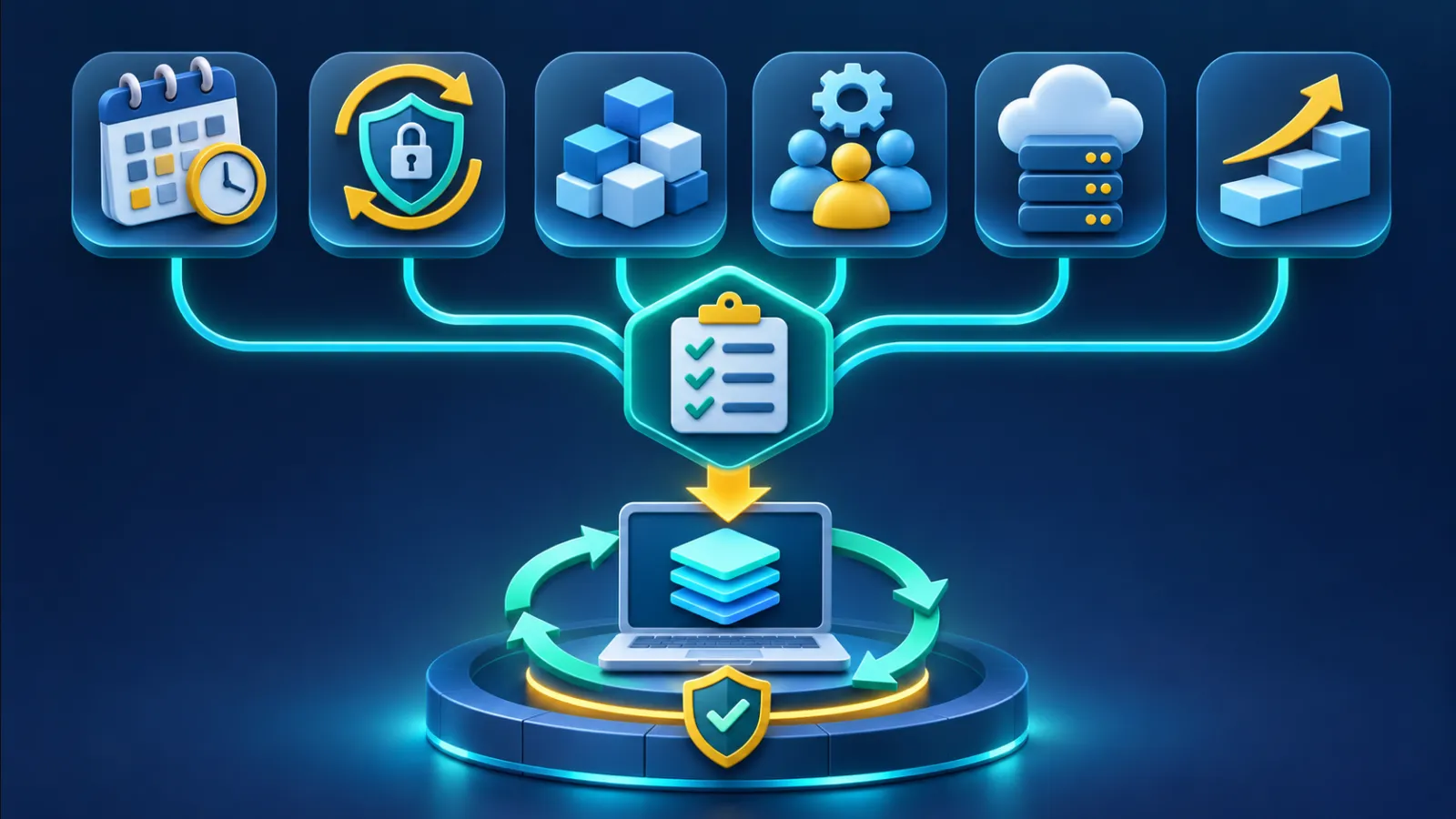
Compare ecosystems without treating brand as a control
| Area | What to investigate | Failure to avoid |
|---|---|---|
| Release policy | Support dates, patch cadence and advisory channel | A version ages out unnoticed |
| Package ecosystem | Publisher trust, transitive depth and scanning support | Framework is patched while packages remain exposed |
| Identity | Standards support and maintained integrations | Custom authentication becomes permanent security code |
| Deployment | Reproducible builds, rollback and runtime inventory | Production differs from the tested artefact |
| Skills | Team depth and realistic replacement market | One specialist becomes the upgrade path |
| Operation | Telemetry, diagnostics and platform compatibility | Incidents cannot be understood safely |
A weighted decision is better than a generic score. A public identity service should weight authentication maturity heavily; an offline industrial tool may prioritise platform longevity and deployment control.
Where .NET is a strong choice
Modern .NET provides a documented lifecycle, monthly servicing, mature tooling, first-party web and data libraries, and close integration with Microsoft identity and Azure services. ASP.NET Core includes well-established authentication, authorisation, data-protection and secure-configuration mechanisms. NuGet and build tooling support vulnerability reporting and reproducible automation.
Those capabilities make .NET a strong fit for many business systems, particularly where the organisation already operates Microsoft infrastructure. They do not make a .NET application secure by default. A team can still expose object-level authorisation flaws, log secrets, use vulnerable packages or leave an out-of-support runtime deployed.
Vendor backing can clarify responsibility for the platform, but Microsoft does not maintain the customer's application logic, third-party packages or access model. A good framework reduces the amount of security machinery a team must invent; it does not remove engineering judgement.
PHP and Node.js are not one risk category
PHP ranges from maintained modern frameworks on current runtimes to old bespoke sites with unmanaged plugins. Node.js ranges from small services with restrained dependencies to builds containing thousands of transitive packages. Language names conceal more risk than they reveal.
For PHP, check the runtime branch, server integration, framework version, extensions and third-party products. For Node.js, inspect the Node release line, lock-file discipline, package provenance, lifecycle scripts and dependency graph. Apply the same evidence standard to .NET: runtime, hosting model, NuGet graph and actual deployment.
A proposal that dismisses a competing ecosystem without analysing the application is selling preference. Competence includes knowing when the team's preferred stack is not the best operational fit.
Framework features do not replace application design
Authentication middleware can validate an identity while application code still allows one customer to retrieve another customer's record. An ORM can parameterise queries while unsafe raw SQL remains. Encryption APIs can protect data while keys are copied into configuration files.
Framework controls are building blocks. Threat modelling determines where they are needed; architecture determines boundaries; testing and telemetry provide evidence. Security failures commonly occur in the relationships between features, not because the framework lacked a checkbox.
Prefer established mechanisms over custom authentication, cryptography or serialisation. Custom security code creates a long review and maintenance burden, even when the first implementation appears small.
Upgradability should influence the first architecture
Keep business rules separate from framework adapters where it improves testing and replacement. Avoid depending on internal or obsolete APIs. Pin dependencies, preserve repeatable builds and run tests on supported target versions before the current version approaches end of support.
Do not abstract every framework type behind a home-grown platform. Excess indirection can make upgrades harder because maintainers must understand two frameworks. Isolate volatile or risky boundaries, not every useful feature.
Small regular upgrades create evidence about compatibility. Skipping several major releases combines language, framework, package, infrastructure and database changes into one risky programme.
Questions for a framework proposal
- Which exact release will be used and when does support end?
- Who owns monthly or point-release servicing?
- Which packages and identity integrations sit outside core support?
- How will the live runtime and dependency inventory be produced?
- What automated tests make an update safe?
- How is rollback handled when data or messages have changed?
- Which skills must remain available for operation?
- What is the expected route and budget for the next major version?
Ask for trade-offs, not a claim that one technology is “enterprise grade”. A credible architect explains what the choice makes easier, what it makes harder and which future evidence would change the recommendation.
Account for exit and concentration risk
A framework becomes expensive when only one person can update it or when the application depends on a proprietary extension with no practical replacement. Assess the market for competent maintainers, the licence and hosting terms, access to source and data, and the feasibility of moving the application.
Portability does not require pretending every framework is interchangeable. An abstraction layer over every database, identity and cloud API can cost more than a later migration. Identify the few dependencies with high switching cost and keep business rules and data ownership clear around them.
Team familiarity deserves weight, but familiarity with an obsolete stack is not a permanent advantage. Compare the cost of training and staged migration with the rising cost of scarcity. Conversely, adopting a fashionable framework the team cannot operate creates immediate concentration risk even when the ecosystem is healthy.
Run a thin production-shaped experiment where uncertainty is material. It should test identity, deployment, diagnostics, package governance and one representative data path, not just whether a page renders. The experiment's purpose is to change the decision before the full system inherits it.
Choose the maintenance system as well as the framework
A framework decision is complete only when it includes ownership, upgrade cadence, deployment evidence and an exit from support. Initial development cost matters, but a system that cannot accept routine security change is expensive at precisely the wrong moment.
Continue with C3's guides to security by design, unsupported software and maintainable ASP.NET Core architecture.
Review the decision with production evidence
Revisit the framework choice after the first production increment. Compare patch effort, diagnostics, hosting cost, team learning and dependency behaviour with the assumptions used during selection. A sound choice may still need adjustments to package policy or architecture. Record those lessons before another system repeats the assumptions.
Do not interpret every early difficulty as a reason to switch. Migration itself carries risk. Change direction when evidence shows a structural mismatch, not because another ecosystem has released an attractive feature.
Frequently asked questions
Is .NET more secure than PHP or Node.js?
Not categorically. .NET offers mature security capabilities and a clear support model, but application design, packages, configuration and maintenance determine the deployed result.
Should every business application use an LTS release?
No. LTS suits many stable systems, while regularly updated teams may use shorter-support releases responsibly. The key is a credible patch and upgrade cadence.
Does open source make a framework less secure?
No. Licensing model alone does not determine security. Examine governance, maintainer response, release practices, ecosystem and your ability to update.
Select for the software's working life
Make lifecycle evidence part of the architecture decision.
If a new build or modernisation needs a proportionate .NET and Azure architecture, talk to C3 Software about the support and operating model as well as delivery.