Local software development
Software Developers in Bournemouth: How to Choose the Right Development Partner
The best software developer for a Bournemouth business is not simply the nearest supplier. Choose for evidence, delivery fit and long-term ownership, then use proximity to make an already strong working relationship better.

If you are searching for software developers in Bournemouth, start by deciding what kind of help you actually need. A business replacing an operational system needs different evidence from one adding a short-lived burst of development capacity. A supplier may be locally convenient and still be wrong for the architecture, risk or ownership model.
A useful shortlist can include developers in Bournemouth, Poole, Christchurch and wider Dorset. These places form a practical working area for discovery workshops and occasional face-to-face sessions. They should not become arbitrary boundaries. Modern software delivery still depends on source control, written decisions, automated delivery and clear ownership between meetings.
C3 Software is based in Bournemouth and has built bespoke software and cloud products since 2001. Our practical experience includes .NET, ASP.NET Core, Blazor, Razor Pages, Azure, MongoDB, SQL Server, APIs, SaaS architecture, accessibility and AI integrations. Those facts describe a capability profile, not proof that we fit every project. The same evidence-led test should be applied to us as to any other supplier.
Decide whether you need a partner, contractor or freelancer
“Software developer” is often used for three materially different buying decisions. A development partner accepts responsibility for shaping and delivering an outcome. A contractor normally adds capacity inside an existing team and delivery system. A freelancer may do either on a smaller scope, but usually with less organisational backup.
The distinction changes what you must manage. Hiring a partner transfers some delivery coordination, but never transfers product ownership. Hiring a contractor leaves architecture, prioritisation and acceptance with your team. Hiring a freelancer for an end-to-end build concentrates both knowledge and continuity risk in one person. A low day rate can therefore sit inside a high-risk commercial model.
If temporary capacity is the real need, use the separate guide to hiring a contract software developer in Bournemouth. For smaller directly owned work, compare the continuity controls in the Bournemouth freelance developer guide.
Write a one-paragraph problem statement before approaching suppliers. Describe who is affected, what work happens now, what failure costs and what measurable change would matter. Do not begin with a feature inventory. A feature list encourages suppliers to price assumptions; a problem statement gives them room to expose uncertainty.
Evidence matters more than a polished portfolio
Portfolio screenshots show that something was launched. They reveal little about data migration, access control, support demand, deployment safety or how the software behaved after three years of change. Ask candidates to explain a relevant engineering decision, the alternative they rejected and what operational burden the chosen design created.
Good answers contain boundaries. An experienced developer will say where a technology is unsuitable, what they would verify during discovery and which risks cannot be priced honestly yet. Absolute certainty before examining the existing process, data and integrations is usually sales confidence rather than engineering confidence.
For an existing system, ask how the supplier would learn it without making the first release dangerous. Look for repository and dependency assessment, production observability, database constraints, deployment history and user journeys. Rewriting immediately is not evidence of ambition. It can be evidence that the supplier has not priced the business knowledge embedded in the old system.
Ask for the consequences, not just the technology
A claim such as “we use Azure” is not meaningful on its own. Ask who responds when a deployment fails, how backups are restored, how privileged access is removed and how cloud cost is reviewed. Technology choice and operating model are one decision. The support team inherits every architecture diagram eventually.
Likewise, “Agile” does not guarantee visibility. Useful evidence is a reviewable backlog, frequent working increments, explicit acceptance criteria and a decision log. A fortnightly demonstration is valuable only when stakeholders can change priorities before sunk cost accumulates.
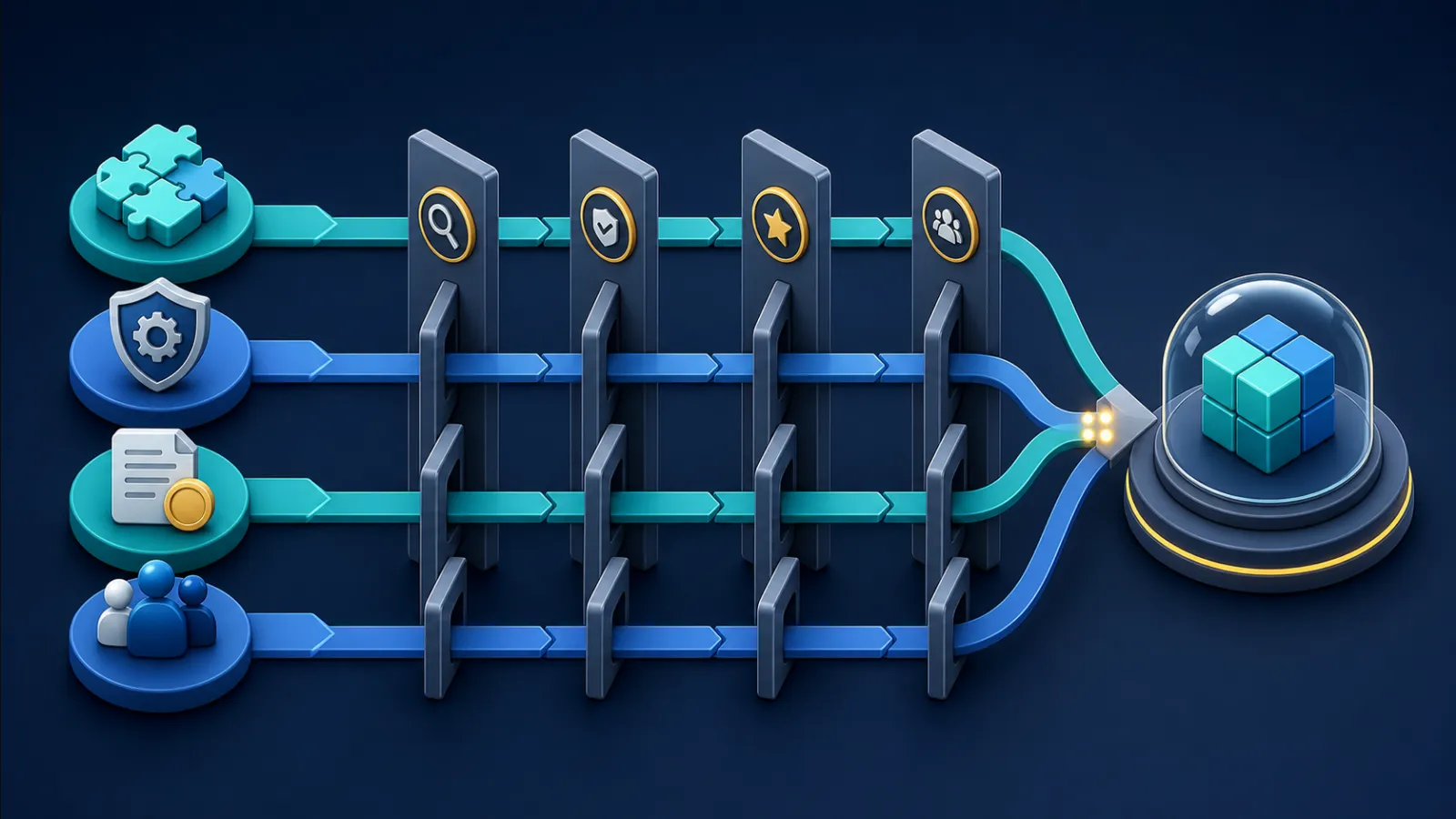
Use discovery to buy evidence before buying a build
Discovery is not a paid meeting followed by the original estimate. It should reduce uncertainty. Depending on the project, useful outputs include mapped workflows, prioritised user outcomes, integration constraints, a data migration assessment, a security model, prototype findings and an incremental delivery plan.
A fixed price becomes meaningful only when scope, assumptions and acceptance are sufficiently bounded. Before that point, a precise total often hides contingency or future change requests. A short discovery phase can make a later fixed price safer, but some work remains inherently variable. Legacy integration and poor-quality data are common examples.
Retain the outputs even if you do not commission the build. Discovery that can only be understood by its author creates commercial dependency rather than reducing it. You should be able to take the problem model, decisions and risks to another capable team.
Compare proposals on the whole delivery model
| Question | Strong evidence | Warning sign |
|---|---|---|
| How will scope be controlled? | Prioritised outcomes, acceptance rules and visible decisions | A long feature list treated as complete requirements |
| Who owns architecture? | A named technical owner and review process | Responsibility diffused across “the team” |
| How is quality demonstrated? | Layered tests, reviews and production observability | Testing deferred to the end |
| What happens after launch? | Support boundaries, handover and recovery are priced | Launch presented as the finish line |
| Who controls the assets? | Your access to code, cloud, data and documentation | Critical accounts held only by the supplier |
Compare like with like. One proposal may include discovery, delivery management, testing, deployment and warranty while another contains development hours alone. The cheaper number may simply leave more work and more risk with you.
Ask how changes are priced and approved. Change is not automatically supplier failure; learning is expected. The danger is invisible change, where assumptions turn into invoices after the buyer has lost negotiating leverage. A healthy commercial model makes the current forecast, excluded work and consequences of new requests visible.
Security and continuity belong in supplier selection
Security is not a penetration test added before launch. Identity, authorisation, tenant separation, audit evidence, data retention and deployment access affect the design from the beginning. Ask who can access personal or commercially sensitive data, whether production access is time-bound and how actions are audited.
Continuity starts with ordinary controls: the customer owns or can access repositories, cloud subscriptions, domains, certificates and third-party accounts. Build instructions should work away from the original developer's machine. Restore procedures should be exercised rather than merely documented. An unread backup is not a recovery capability.
Intellectual-property wording also needs to match the delivery model. Bespoke code, pre-existing supplier components and third-party open-source packages are different things. Clarify rights and licensing before the work creates leverage. Obtain appropriate legal advice for the contract rather than treating a technical checklist as legal review.
Where a local Bournemouth developer adds value
Proximity is most valuable when the work benefits from high-bandwidth collaboration: observing a manual process, running a discovery workshop, meeting operational users or resolving a difficult decision with several stakeholders. Bournemouth, Poole and Christchurch are close enough for those sessions without turning every conversation into travel.
Local does not mean office-based every day. Requiring co-location can shrink the talent pool without improving the delivery system. A stronger model uses face-to-face time deliberately and makes routine progress legible remotely. Written decisions also protect the project when people are unavailable.
Search terms such as “software company Dorset” or “app developers Poole” may return different suppliers, but the evaluation should remain the same. Do not infer mobile expertise from the word “app”, or business-system experience from an attractive website. Match evidence to the expensive risks in your project.
A practical shortlist for your first conversation
- Can the developer restate the business problem without jumping straight to features?
- Have they explained the largest unknowns and how discovery will reduce them?
- Can they discuss a production failure, recovery and the lesson it changed?
- Are delivery, testing, security, deployment and support responsibilities named?
- Will you control the code, data, infrastructure accounts and essential documentation?
- Does the commercial model expose assumptions, exclusions and change?
- Is there a credible small first commitment before the largest spend?
- Can both sides end the engagement without losing operational knowledge?
The best first step is rarely asking four companies for a price against an untested feature list. Speak to a smaller number, compare how they reason about the problem, then purchase enough discovery to replace assumptions with evidence.
Frequently asked questions
Should I only consider software developers based in Bournemouth?
No. Include Poole, Christchurch, wider Dorset and remote specialists when they fit the work. Local access is useful, but competence, communication and ownership matter more.
How many suppliers should I shortlist?
Usually two or three serious conversations reveal more than a large tender based on shallow information. Use the same problem statement and evidence questions so comparisons remain fair.
Should I ask for a fixed price?
Ask when the outcome and constraints are sufficiently understood. Before discovery, a fixed price may price uncertainty badly rather than remove it.
Choose for the relationship you will need after launch
A nearby developer can make workshops easier, but successful software depends on decisions that remain sound after the meeting ends. Select the Bournemouth-area partner that makes uncertainty visible, gives you control of essential assets and treats operation as part of delivery.
If you are preparing a shortlist, C3's guides to choosing a software development partner, effective software discovery and designing for maintainability provide deeper questions. You can also review our software development services or discuss a Bournemouth or Dorset project.