Bespoke business systems
Bespoke Software Development in Bournemouth: Costs, Process and Supplier Questions
Bespoke software is justified when a valuable business process cannot be served economically by configuration or an existing product. The investment is a continuing operating commitment, not simply a quote for writing code.

Businesses searching for bespoke software development in Bournemouth are often trying to escape a process held together by spreadsheets, duplicated entry, email approvals or ageing software. Custom development can remove those constraints, but it can also automate confusion at considerable cost.
Begin with the business constraint, not the application idea. Identify where work waits, errors enter, customers abandon a journey or staff create manual workarounds. Then compare bespoke development with buying, configuring, integrating or incrementally modernising what already exists.
A Bournemouth supplier can observe local operations and run workshops with teams across Poole, Christchurch and Dorset. Proximity helps reveal the real process. It does not remove the need for disciplined discovery, secure architecture, measurable releases and a funded operating model.
When bespoke software is the right investment
Custom software is strongest when the process creates genuine differentiation, the organisation has unusual integration or compliance needs, or existing products impose recurring manual cost. It may also be justified when a legacy system blocks change but contains business knowledge that should be modernised gradually.
It is weaker when a mature product already supports the process and the requested differences are preferences rather than valuable capabilities. Owning code feels like control, but ownership also means funding security updates, support, hosting, recovery and future changes.
Do not compare a software subscription with a build quote alone. Compare the total operating models over a sensible period: licences, implementation, integration, process compromises, internal administration, hosting, support and exit. A product that looks expensive may still cost less than owning an undifferentiated system.
What drives bespoke software cost
Screen count is a poor predictor. Cost follows uncertainty, business rules, data, integrations, security boundaries and the consequences of failure. A small administrative interface controlling sensitive financial decisions may require more engineering than a large public content site.
Legacy data increases cost because it rarely matches the new model. Duplicate identities, missing fields and inconsistent history must be profiled and reconciled. Migration is a business decision about meaning, not a final export-and-import task.
Integrations also create unknown outcomes. A remote timeout does not prove that nothing happened. Reliable designs may need idempotency, reconciliation, queues, alerting and support tools. The API call can be easy while the recovery model is expensive.
Non-functional requirements matter. Accessibility, audit trails, availability, geographic restrictions, response times and retention rules can change architecture. If these appear after a visual prototype is approved, the estimate was based on only the visible fraction of the system.
Why useful prices come in stages
An early range helps decide whether further investigation is rational. It should be presented with assumptions and exclusions, not false precision. Discovery then replaces some assumptions with evidence and supports a firmer estimate for the first production increment.
Fixed price works where scope and acceptance are bounded. Time-based work fits diagnosis and evolving requirements. Many projects benefit from staged fixed commitments: discover, deliver one valuable slice, evaluate evidence, then fund the next priority.
The cheapest proposal may omit delivery management, testing, migration, deployment, training or support. Ask each supplier to separate one-off build, third-party costs, cloud operation and expected maintenance. Comparable totals require comparable responsibility.
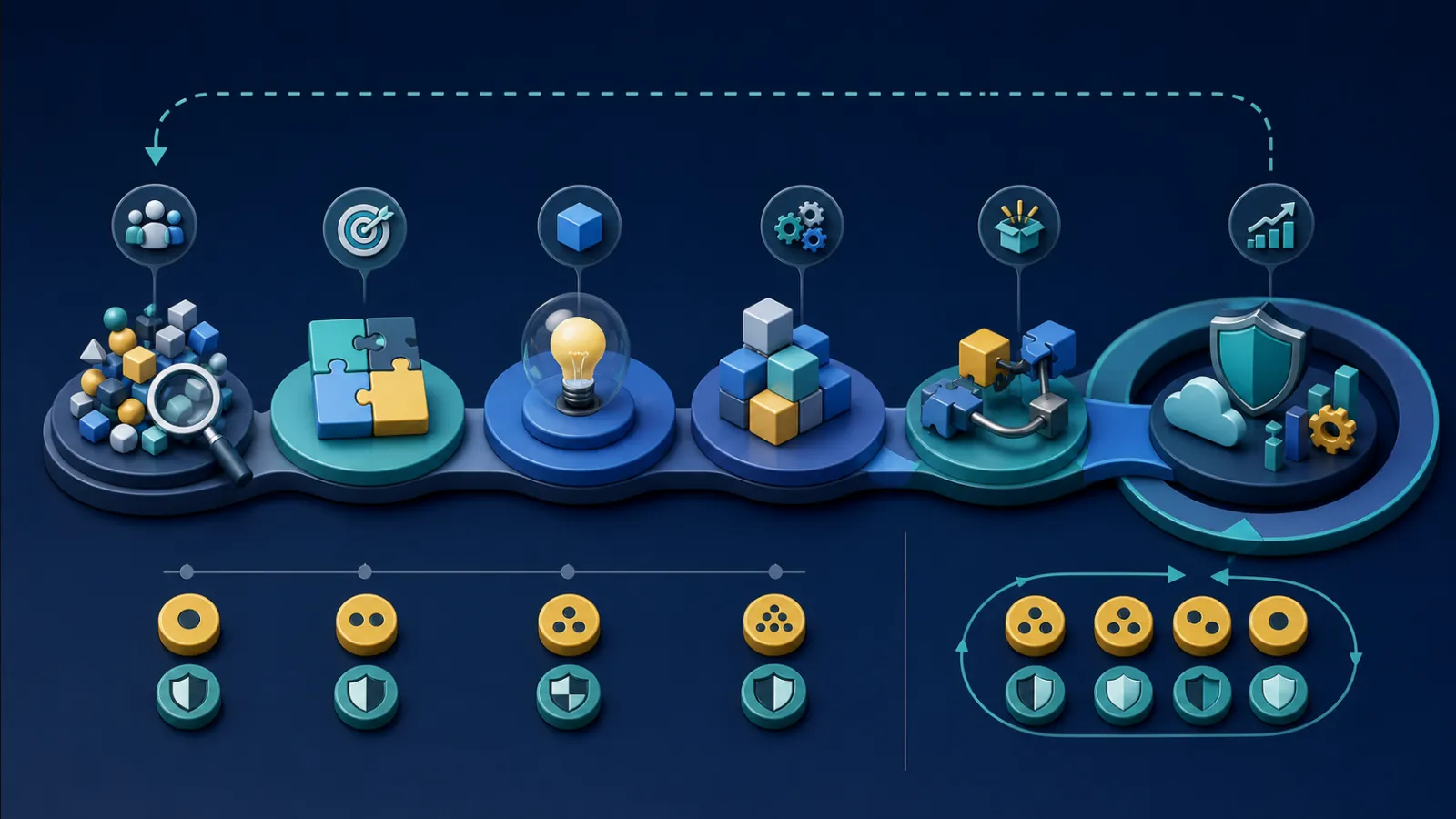
A delivery process that controls risk
1. Frame the outcome
Describe affected users, current work, measurable harm and desired change. Establish a decision owner. Without one, the supplier may collect incompatible preferences and call the result requirements.
2. Discover the real process
Observe work, map exceptions, inspect data and identify integration owners. The normal path is rarely the expensive part. Returns, cancellations, partial approvals, duplicate records and unavailable external systems reveal the true design.
3. Test the riskiest assumptions
Use prototypes for interaction questions and technical spikes for feasibility questions. Do not confuse either with production software. Production needs identity, authorisation, accessibility, observability, deployment and recovery that a disposable experiment may omit.
4. Deliver a thin production-shaped slice
The first increment should cross interface, business logic, data, deployment and support for a narrow outcome. This exposes the delivery system early. Building every screen before integrating the database merely postpones discovery.
5. Expand using evidence
Observe real use, support demand, failure and performance. Prioritise the next increment based on value and risk rather than the original feature order. Learning only saves money when it is allowed to change the plan.
6. Operate deliberately
Name ownership for alerts, backups, incidents, dependency updates and cloud spend. Launch moves risk into production; it does not complete the engineering responsibility.
What a credible Bournemouth supplier should explain
| Area | Question | Useful answer contains |
|---|---|---|
| Discovery | What will be less uncertain? | Specific outputs, decisions and risk tests |
| Architecture | Why is this design proportionate? | Alternatives, trade-offs and operating consequences |
| Delivery | How soon will working evidence exist? | Small releasable increments and acceptance rules |
| Security | Where are trust boundaries? | Identity, authorisation, data access and audit |
| Operation | Who owns failure after launch? | Monitoring, recovery, support and escalation |
| Commercials | How does new learning change cost? | Assumptions, forecast updates and approval controls |
Ask candidates to describe a decision they reversed after evidence changed. Software projects punish suppliers who defend an early idea for commercial or personal reasons. Adaptability should not mean uncontrolled scope; it means changing direction through a visible decision process.
Also ask who actually performs the work. Sales expertise, architecture expertise and implementation expertise may belong to different people. Understand continuity and review, especially if one developer holds most system knowledge.
Security, privacy and recovery shape the design
Map data and access before choosing components. Who can see which records? Can support staff impersonate users? Which actions need durable audit evidence? A role called “admin” is not an authorisation model when several resources, customers or sensitivity levels exist.
Use least-privilege named access for developers and deployment systems. Keep production data out of development unless there is a justified, controlled process. Secrets belong in managed configuration, not repositories or shared documents.
Backups need restoration objectives and tests. Recovery may also depend on infrastructure configuration, identity providers, certificates and external services. A database file alone does not recreate a working application.
Privacy and regulatory duties vary with context. Software can enforce retention, consent, export and deletion workflows, but the organisation must decide the lawful and operational rules with appropriate professional advice.
Plan for change without over-engineering
Maintainability comes from clear boundaries, readable code, tests around important behaviour and a reliable delivery path. It does not require microservices, Kubernetes or every fashionable abstraction. Architecture should reflect current risks and credible change.
Prefer reversible decisions when uncertainty is high. A modular monolith often preserves boundaries with less operational burden than distributed services. A managed cloud service can remove maintenance, but it introduces pricing, limits and vendor dependency that must be understood.
Document why consequential decisions were made. Future developers can read what the code does; they may not know which rejected alternative failed a security, cost or business constraint. Short decision records preserve that context.
Measure return after deployment
Benefits need baselines. Record time spent, error rates, throughput, delay or conversion before changing the process. “Saves time” becomes financial value only when capacity is reduced, redeployed or used to create more output.
Include adoption. A technically successful system that users bypass has not delivered the planned return. Training, accessibility and migration of live work are delivery activities, not optional change-management extras.
Review cloud and support cost alongside business benefit. Successful adoption may increase infrastructure use. That can be a good outcome, but only if unit economics remain visible.
Local reach without duplicated town pages
A Bournemouth-based development relationship can naturally serve Poole, Christchurch, Ferndown, Ringwood and wider Dorset. The right content strategy reflects that genuine service area in useful pages rather than publishing near-identical pages with town names exchanged.
For buyers, the same principle applies: search locally enough to make collaboration practical, then select on evidence. The nearest supplier is not automatically the lowest-risk supplier, and a remote specialist is not automatically difficult to work with.
When you are ready to compare suppliers, use the Bournemouth software development partner checklist to test delivery, commercial and operational evidence.
Frequently asked questions
How long does bespoke software take?
It depends on scope, uncertainty and release strategy. A useful first increment should arrive well before the entire envisioned system, allowing evidence to guide later investment.
Can a supplier quote before discovery?
They can offer a range based on explicit assumptions. A reliable fixed figure for complex work normally requires more evidence about process, data and integrations.
Who should own the source code?
The contract should define rights to bespoke code, supplier components and third-party packages. Operationally, the customer should have appropriate access and continuity. Obtain legal advice for the wording.
Does C3 Software work outside Bournemouth?
Yes. Local sessions can support organisations across Bournemouth, Poole, Christchurch and Dorset, while routine software delivery can be conducted remotely.
Fund the next evidence-producing decision
Do not begin by purchasing the complete imagined system. Confirm that bespoke software is the right model, investigate the expensive unknowns and commission a narrow production-shaped outcome. Each stage should leave the business better informed and in control.
Explore UK bespoke software costs, the build-or-buy decision and why discovery saves money. You can also review C3's bespoke software development services or discuss a Bournemouth-area project.